

How to adjust the foam concentration of a foam hydrant?
Jan 16, 2026
As a reputable supplier of foam hydrants, I understand the critical importance of maintaining the right foam concentration in these essential firefighting tools. The foam concentration of a foam hydrant is a key factor that directly impacts its firefighting effectiveness. In this blog post, I will share some professional insights on how to adjust the foam concentration of a foam hydrant.
Understanding the Basics of Foam Concentration
Before delving into the adjustment methods, it's crucial to understand what foam concentration means. Foam concentration refers to the proportion of foam concentrate in the water - foam solution. Different types of fires require different foam concentrations for optimal extinguishing results. For example, Class A fires (ordinary combustibles like wood and paper) typically need a lower foam concentration, while Class B fires (flammable liquids) often demand a higher concentration.
The ideal foam concentration can vary depending on several factors, including the type of foam concentrate used, the nature of the fire, and the specific design of the foam hydrant. Most foam concentrates come with manufacturer - recommended concentration ranges, which serve as a starting point for adjustment.
Factors Affecting Foam Concentration
1. Foam Concentrate Type
There are various types of foam concentrates available in the market, such as protein foam, synthetic foam, and fluoroprotein foam. Each type has its own unique chemical properties and recommended concentration levels. For instance, protein foam may require a higher concentration compared to some synthetic foams to achieve the same level of fire - suppression performance.
2. Water Quality
The quality of the water used in the foam hydrant system can also affect the foam concentration. Hard water, which contains high levels of minerals like calcium and magnesium, can react with the foam concentrate and alter its properties. This may lead to changes in the foam's expansion ratio and stability, ultimately affecting the effective foam concentration.
3. Flow Rate
The flow rate of water through the foam hydrant is another important factor. A higher flow rate may require a different foam concentration adjustment compared to a lower flow rate. If the flow rate is too high, the foam concentrate may not be properly mixed with the water, resulting in an uneven or incorrect foam concentration.
Methods for Adjusting Foam Concentration
1. Using a Foam Proportioner
A foam proportioner is a device that is specifically designed to mix the foam concentrate with water at a precise ratio. There are several types of foam proportioners, including in - line proportioners, balanced - pressure proportioners, and venturi - type proportioners.

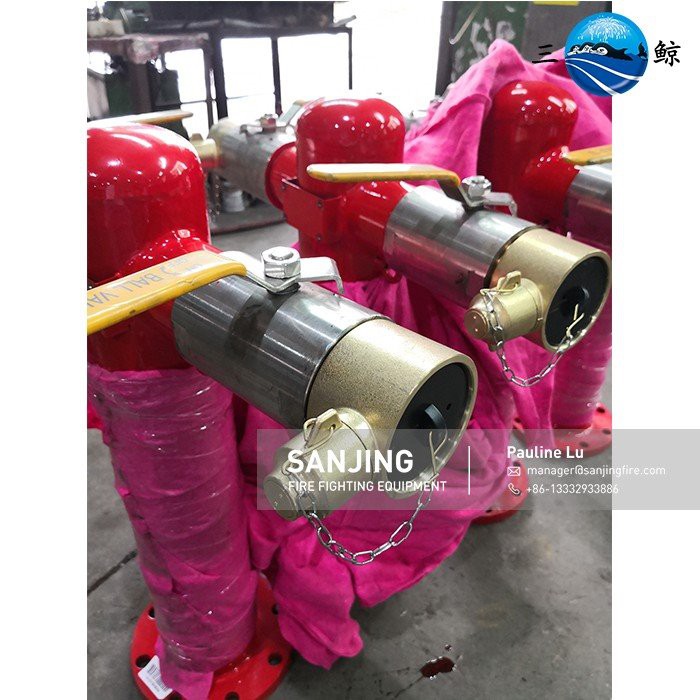
In - line proportioners are relatively simple and are often used in smaller foam hydrant systems. They work by injecting the foam concentrate into the water stream at a fixed ratio. To adjust the foam concentration using an in - line proportioner, you may need to change the size of the orifice or adjust the pressure differential across the proportioner.
Balanced - pressure proportioners are more sophisticated and are commonly used in larger, more complex foam hydrant systems. They maintain a constant pressure difference between the foam concentrate and the water, ensuring a consistent foam concentration. Adjusting the foam concentration with a balanced - pressure proportioner usually involves adjusting the pressure settings on the proportioner.
Venturi - type proportioners operate based on the Venturi effect. As water flows through a constricted section of the pipe, a vacuum is created, which draws the foam concentrate into the water stream. To adjust the foam concentration with a venturi - type proportioner, you can change the size of the venturi tube or the flow rate of the water.
2. Manual Mixing
In some cases, especially in smaller or emergency situations, manual mixing of the foam concentrate and water may be necessary. This method involves measuring the appropriate amount of foam concentrate and adding it to a known volume of water. However, manual mixing is less accurate compared to using a foam proportioner and requires careful attention to ensure the correct foam concentration is achieved.
When manually mixing, it's important to follow the manufacturer's instructions for the specific foam concentrate. Use calibrated measuring tools to accurately measure the foam concentrate and water. Stir the mixture thoroughly to ensure uniform distribution of the foam concentrate in the water.
Testing and Monitoring Foam Concentration
Once the foam concentration has been adjusted, it's essential to test and monitor it regularly. There are several ways to test the foam concentration:
1. Refractometer
A refractometer is a commonly used tool for measuring the foam concentration. It works by measuring the refractive index of the water - foam solution. Different foam concentrations will have different refractive indices, allowing you to determine the actual foam concentration. To use a refractometer, simply place a few drops of the water - foam solution on the prism of the refractometer and read the concentration value from the scale.
2. Laboratory Analysis
For more accurate and detailed analysis, you can send samples of the water - foam solution to a laboratory. Laboratory analysis can provide information not only about the foam concentration but also about the quality and performance of the foam. This is particularly useful when dealing with complex or critical applications.
Importance of Correct Foam Concentration
Maintaining the correct foam concentration in a foam hydrant is of utmost importance for several reasons:
1. Fire - Suppression Effectiveness
The right foam concentration ensures that the foam has the proper expansion ratio and stability, which are essential for effectively extinguishing fires. An incorrect foam concentration may result in a foam that is either too thin or too thick, reducing its ability to cover and suppress the fire.
2. Equipment Protection
Using the correct foam concentration helps protect the foam hydrant and other components of the firefighting system. Incorrect foam concentrations can cause excessive wear and tear on the equipment, leading to premature failure and increased maintenance costs.
3. Environmental Impact
Proper foam concentration also has an environmental impact. Using the right amount of foam concentrate reduces waste and minimizes the release of potentially harmful chemicals into the environment.
Conclusion
Adjusting the foam concentration of a foam hydrant is a critical task that requires a good understanding of the factors involved and the appropriate adjustment methods. As a foam hydrant supplier, I recommend following the manufacturer's guidelines for both the foam concentrate and the foam hydrant system. Regular testing and monitoring of the foam concentration are essential to ensure optimal performance and safety.
If you are in the market for high - quality foam hydrants, including Foam Fire Hydrant, 4 Inch Fire Hydrant Foam System, and 4" Flange 2.5" Outles Fire Foam Hydrant, please feel free to contact us for more information and to discuss your specific requirements. We are committed to providing you with the best products and solutions for your firefighting needs.
References
- National Fire Protection Association (NFPA). NFPA 11: Standard for Low -, Medium -, and High - Expansion Foam.
- Manufacturers' technical manuals for foam concentrates and foam hydrants.
- Fire Protection Handbook, edited by the NFPA.